What is 'Data Amnesia' and How It's Silently Killing Your Brand's Revenue
This post introduces the concept of "data amnesia" — the silent failure that occurs when brands lose customer context as conversations move across channels like Instagram, WhatsApp, Facebook, and email. It explains how this leads to lost deals, cold follow-ups, and wasted marketing spend. The post educates DTC brand owners on why fragmented tooling is the root cause and positions unified AI-powered automation as the solution.

DM Rocket
What is 'Data Amnesia' and How It's Silently Killing Your Brand's Revenue
By DMRocket · 2026 · 8 min read
"A customer DMs you on Instagram. Two days later, your team follows up on WhatsApp — treating the same person like a complete stranger. No history. No context. No memory. This is data amnesia — and it's costing you revenue every single day."
The Silent Killer Nobody Talks About
Every marketer knows about cart abandonment. Everyone tracks email open rates. Everyone obsesses over ROAS.
But there's a problem sitting quietly inside your brand's inbox that nobody measures — and it's destroying your revenue faster than any ad spend mistake ever could.
It's called data amnesia.
And chances are, your brand is already suffering from it.
What Exactly is Data Amnesia?
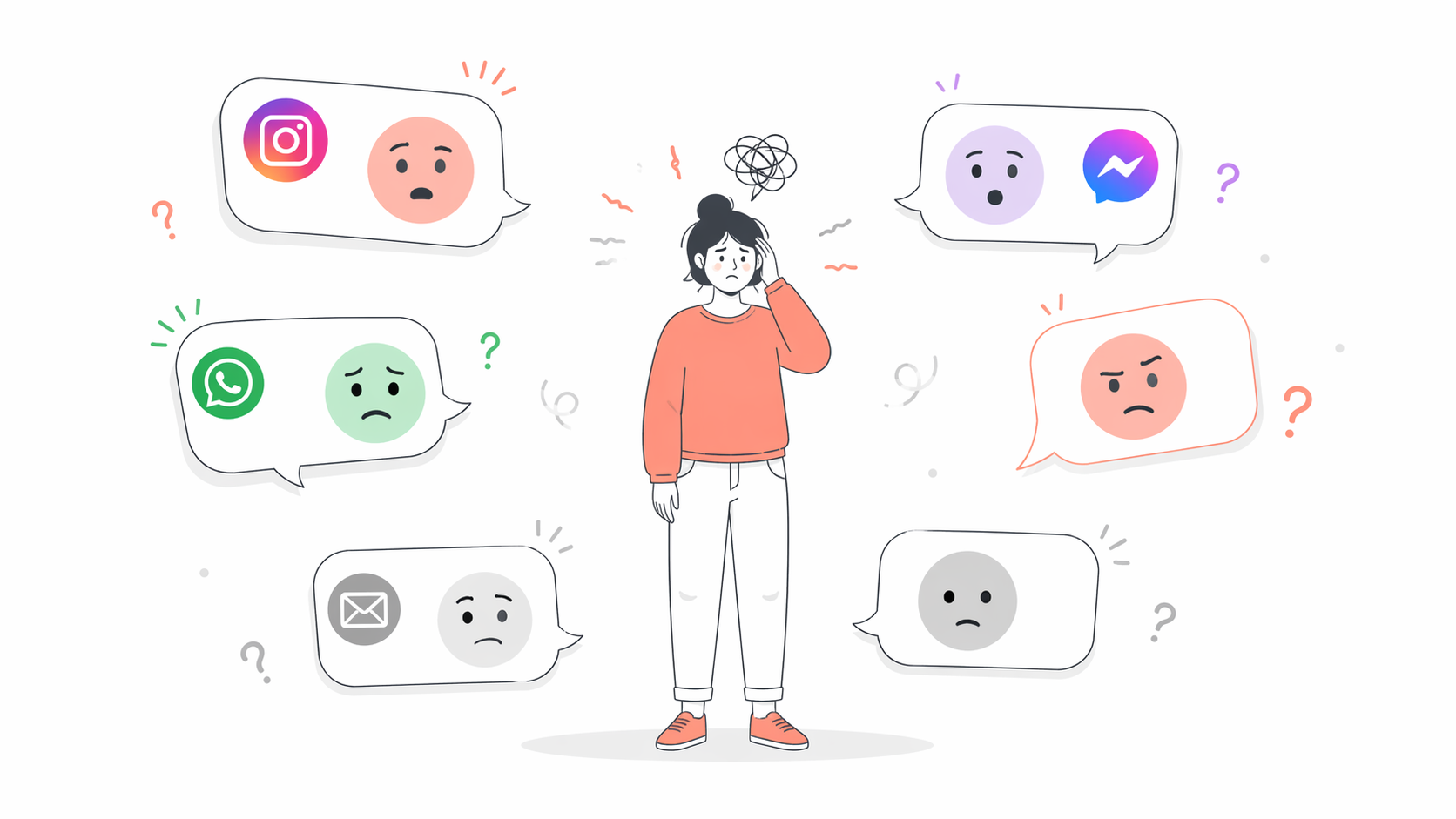
Data amnesia is what happens when your customer's history, intent signals, and conversation context get lost every time they move from one channel to another.
Here's what it looks like in real life:
- A customer sees your reel on Instagram and sends you a DM asking about a product
- Your team responds, answers a few questions, but doesn't close the sale
- The customer clicks a link in your WhatsApp broadcast three days later
- A different team member follows up on WhatsApp — with zero knowledge of the Instagram conversation
- The customer feels like they're starting from scratch
- They leave
That's data amnesia. And it's not a one-off — it's happening hundreds of times a day across your inbox.
Why Does Data Amnesia Happen?
The root cause is simple: your marketing tools were never designed to talk to each other.
| Tool | What It Does | What It Misses |
|---|---|---|
| ManyChat | Automates Instagram/Facebook chat flows | No memory across channels |
| Klaviyo | Sends marketing emails and SMS | Siloed from social DMs |
| WhatsApp Business | Manages customer chats | No sync with Instagram history |
| Your CRM | Stores customer records | Rarely updated in real time |
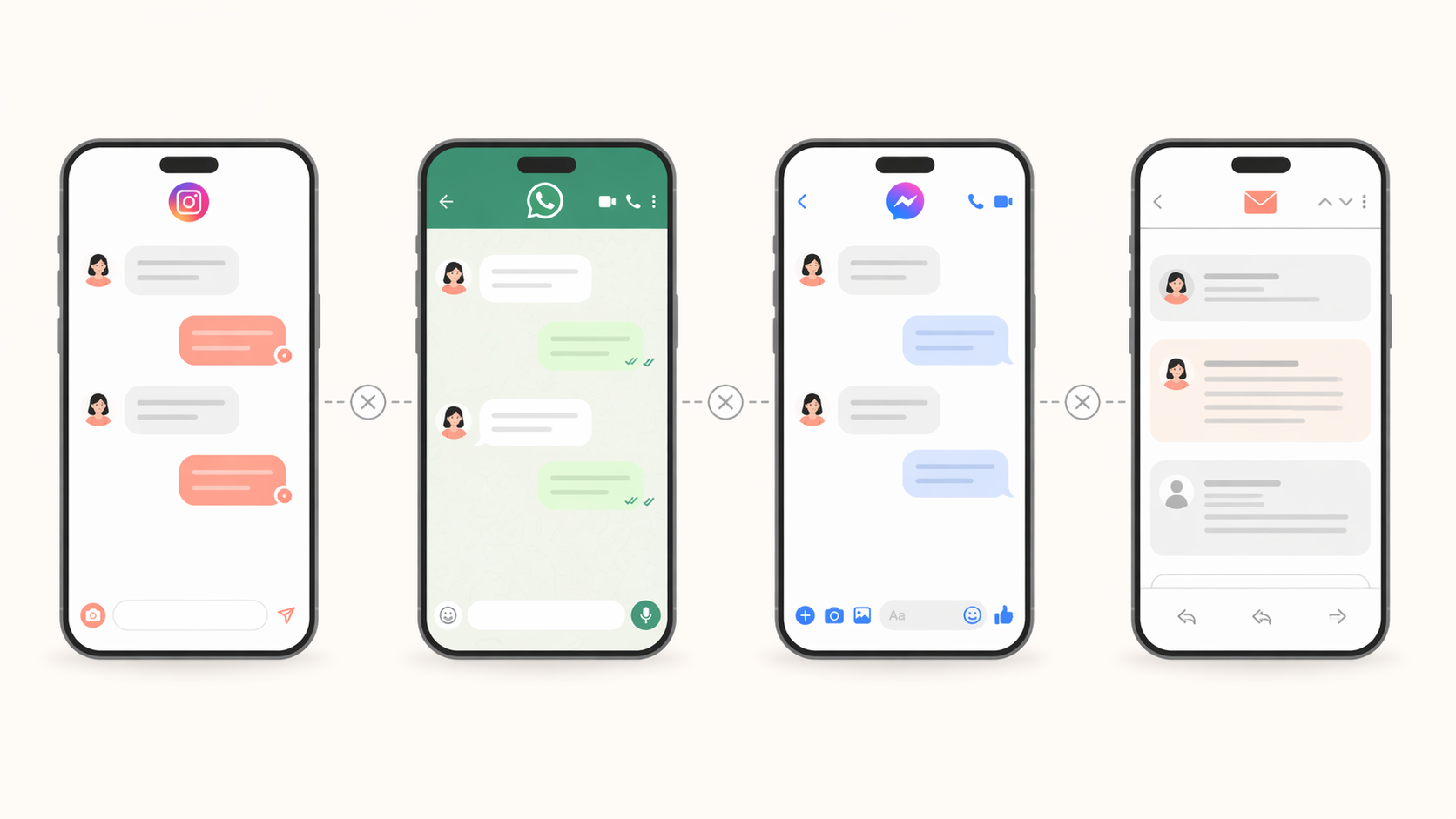
Each tool lives in its own world. Each channel is a silo. Every handoff is a cold start.
The result? Your customer gets treated like a stranger — every single time.
The Real Cost of Forgetting Your Customer
Let's put some numbers to this.
Imagine you get 300 DMs per day across Instagram, WhatsApp, Facebook, and email. Even if just 20% of those conversations had prior intent signals that your team missed — that's 60 warm leads per day treated like cold traffic.
If even 10% of those would have converted at an average order value of ₹2,000 — you're looking at ₹12,000 in lost revenue every single day.
That's ₹43 lakh a year. Vanishing silently. Inside your own inbox.
And that's a conservative estimate.
The 3 Ways Data Amnesia Shows Up in Your Brand
1. The Cold Follow-Up Problem
Your customer spent 15 minutes on a chat conversation on Instagram. They shared their budget, their preferences, their timeline. Then they went quiet.
Three days later, your WhatsApp broadcast goes out. They reply. A team member responds — "Hi! How can I help you today?"
That one message signals to the customer: you don't remember me. Trust evaporates instantly.
2. The Invisible Hot Lead Problem
A lead clicks your product link five times over two days. They're interested. They're ready.
But because your tools don't talk to each other, nobody knows. No alert fires. No follow-up gets triggered. The lead goes cold — and eventually buys from a competitor who was paying attention.
3. The Repeat First-Impression Problem
Every channel becomes a fresh start. Instagram doesn't know what happened on WhatsApp. Email doesn't know what happened on Instagram. Your brand ends up making the same first impression over and over — to a customer who already knows you.
It's exhausting for them. And expensive for you.
Why Your Current Stack Can't Fix This
You might be thinking — "Can't I just connect my tools using Zapier or an integration?"
The honest answer: not really.
Zapier-style integrations move data between tools — but they don't create a unified customer memory. You'll still have conversation history living inside five different platforms. You'll still have agents switching between tabs. You'll still have context dying between channels.
What you actually need is a system that:
- [x] Remembers every customer across every channel
- [x] Carries context from Instagram into WhatsApp into email automatically
- [x] Identifies hot leads in real time based on behavior
- [x] Responds and follows up without a human needing to start from scratch
- [ ]
Relies on a human to manually connect the dots - [ ]
Treats each channel as a separate conversation
That's not a CRM. That's not a chatbot. That's not an email tool.
That's a cross-channel AI revenue engine.
The Fix: Cross-Channel Memory
The brands that will win the next decade are the ones that know their customer — everywhere.
Not just in one inbox. Not just on one platform. Everywhere the customer shows up.
This means building — or deploying — a system that maintains a single customer thread across every channel. One that remembers what was said on Instagram when the customer writes in on WhatsApp. One that knows a lead has clicked your link five times before a human even types "hello."
This is what cross-channel memory looks like in practice:
"Priya messaged you on Instagram on Tuesday asking about your skincare bundle. She clicked your WhatsApp broadcast link twice on Thursday. She's never bought before, but her engagement score is high. DMRocket tagged her as a hot lead and sent a personalized follow-up at 10:14 AM — while you were asleep."
That's not science fiction. That's what's possible when your tools stop being silos and start working as one system.
What to Do Right Now
If you're a DTC brand doing serious volume on Instagram, WhatsApp, or Facebook, here's where to start:
- Audit your current inbox — How many DMs are coming in per day across all channels?
- Track how many are repeat contacts — Are you treating existing leads like strangers?
- Map your handoffs — Where does context get dropped between channels?
- Ask one question: Does your team know, in real time, who your hottest leads are right now?
If the answer to that last question is "no" — you have data amnesia.
Final Thought
Data amnesia isn't a technology problem. It's a strategy problem disguised as a technology problem.
The brands that solve it won't just respond faster — they'll close more deals, retain more customers, and build relationships that compound over time.
Because in 2026, the brand that remembers wins.
DMRocket is the AI revenue engine that ends data amnesia — connecting Instagram, WhatsApp, Facebook, Telegram, email, and SMS into one cross-channel customer memory. Try it free at dmrocket.co
Footnotes
1 Klaviyo reported an average revenue of $5,400 per customer per year across email and SMS alone — DMRocket extends this across 6 channels.
2 Conversational AI market data sourced from industry projections for 2026, with retail cited as the #1 vertical for adoption.
Ready to automate your Instagram DMs?
Join creators and businesses using DMRocket to reply faster, capture hot leads, and turn conversations into revenue.
Get Started Free